How earthquake insurance deductibles work in California
Turn an earthquake deductible percentage into dollars, see how it affects a claim, and compare coverage for your house, belongings, and temporary housing.
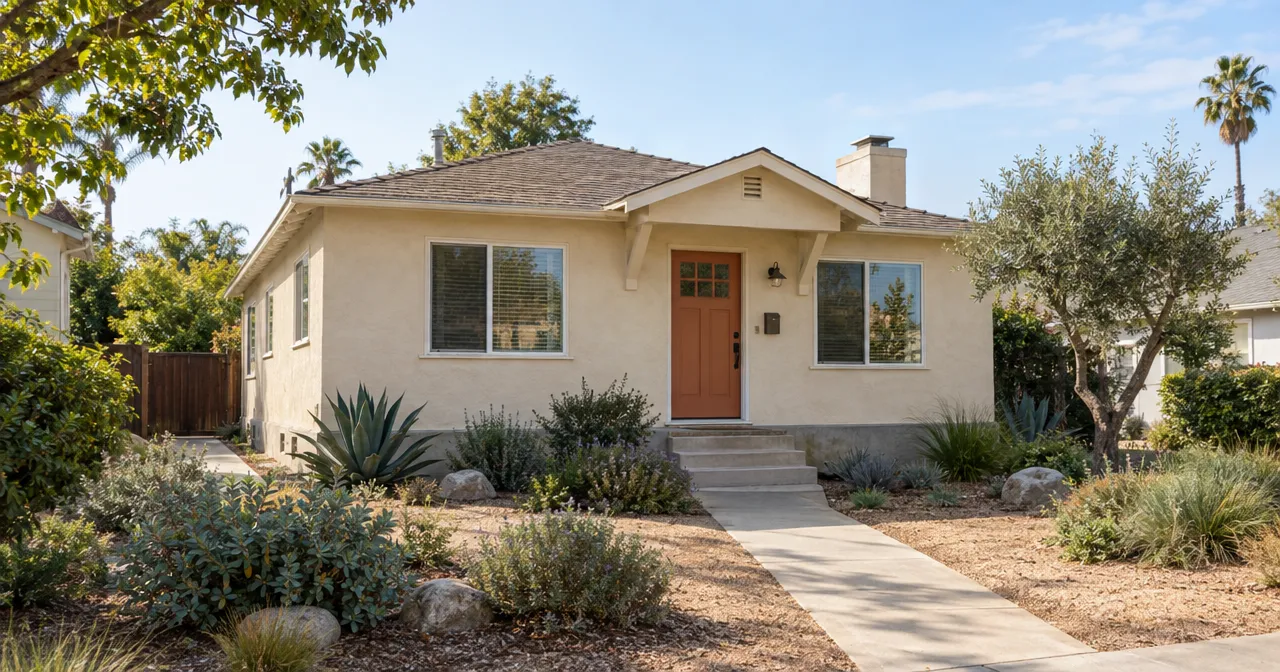
A 15% earthquake deductible on a house insured for $600,000 is $90,000. It is not 15% of whatever repairs cost after a quake. That difference is easy to miss when the first number you see on a quote is the annual premium.
If you own a house in Culver City or nearby Los Angeles neighborhoods, start by asking what the deductible means in dollars. Then check which losses count toward it, whether your belongings have a separate deductible, and whether the policy can help pay for temporary housing even when repairs fall below the deductible. The examples here use California Earthquake Authority (CEA) homeowners policies. Other insurers may calculate deductibles or handle claims differently, and condo and renters policies have different coverage to compare.
What a percentage deductible means in dollars
On a CEA homeowners policy, the deductible for the house is a percentage of the combined limit for the dwelling and covered extensions to the dwelling. For CEA, that combined limit matches the dwelling limit on the companion homeowners policy. The percentage is not based on your purchase price, what you owe on the mortgage, or the contractor’s repair estimate. The declarations page is the policy summary that shows your limits and deductibles; on a CEA policy, look there for the deductible in dollars as well as the percentage.
Suppose the combined limit is $600,000 and you are comparing two deductible options. A 15% deductible is $90,000; a 20% deductible is $120,000. Assume the loss amounts below are entirely covered dwelling damage, with no separate benefits or special limits affecting the math:
- $70,000 of covered damage: Neither option pays for the dwelling loss. The damage is below both deductibles.
- $105,000 of covered damage: The 15% option pays $15,000 toward the dwelling loss. The 20% option pays nothing toward it.
- $150,000 of covered damage: The 15% option pays $60,000 toward the dwelling loss. The 20% option pays $30,000.
In that last example, you don’t send a $90,000 check to the insurer to unlock a payment. The deductible is subtracted when the covered loss is calculated. You still need a plan to pay the part of the repair the policy doesn’t pay. See the deductible clause in the CEA’s January 2026 Standard Homeowners sample policy for what can count toward the threshold. A contractor’s total estimate may include work the policy excludes or limits, so it isn’t necessarily the amount used in the claim calculation.
The deductible also doesn’t shrink the CEA policy limit. With a $600,000 limit and a $90,000 deductible, the maximum dwelling payment is still $600,000, not $510,000. In a simplified example with $700,000 in covered dwelling damage, subtracting the deductible leaves $610,000. The $600,000 limit then caps the payment. You’d be responsible for $100,000 in all: the $90,000 deductible plus the $10,000 that exceeds the limit after the deductible is applied.
Which deductible options are available for your house?
CEA lists dwelling deductibles of 5%, 10%, 15%, 20% and 25%, but does not offer the two lowest options when the dwelling limit is above $1 million. The two lowest options are also unavailable for a frame home built before 1980 that is not on a slab foundation and does not have a verified seismic retrofit. The CEA’s homeowners coverage comparison lists those restrictions alongside the coverage choices.
For example, if you bought a 1950s house in Mar Vista and the seller said it was bolted to the foundation, start by finding any permits, inspection records, or retrofit paperwork. Ask your insurer what it needs to verify the work rather than assuming a note in the listing is enough. CEA has a retrofit verification process, and qualifying work may affect both deductible options and eligibility for a premium discount. If your dwelling limit is above $1 million, however, a verified retrofit does not remove the separate restriction tied to the limit.
How the deductible affects your belongings
With CEA Standard Homeowners, personal property coverage is included, but damage to belongings doesn’t help meet the dwelling deductible. In the $600,000 example with a 15% deductible, suppose you have $30,000 in covered dwelling damage and $8,000 in otherwise covered damage to furniture and other belongings. Assuming no other eligible costs count toward the dwelling deductible, you would not receive a payment for those belongings under the Standard policy, because the qualifying loss hasn’t exceeded $90,000.
With CEA Homeowners Choice, belongings coverage is optional. If you buy it, it has its own deductible based on the personal property limit. Suppose you select a $25,000 belongings limit with a 10% deductible. That is a $2,500 deductible. If the same $8,000 of contents damage is covered, with no item sublimits affecting the example, that would leave $5,500 payable for belongings even though the dwelling loss is below its deductible. If the dwelling deductible is met or exceeded under the policy’s rules, the separate belongings deductible is waived. The January 2026 Homeowners Choice sample policy spells out the waiver and the limits for specific categories of belongings.
When comparing the two forms, ask what would happen if the quake damaged mostly the contents, not the house. Ask about items you’d have to replace first, such as beds or essential electronics. A $25,000 limit for belongings doesn’t mean every damaged item can be counted at its full replacement price; exclusions and smaller limits for certain categories can change the result.
Temporary housing can work differently
CEA calls this loss of use. It’s included with Standard Homeowners and optional with Homeowners Choice. When it’s included, it has no deductible. That means eligible additional living expenses can be payable even if the covered damage doesn’t produce a dwelling payment. The policy still has to cover the reason you can’t occupy the house, and the amount and duration of payments are subject to its terms. Choosing a higher dwelling deductible doesn’t by itself raise or lower your loss-of-use limit.
Say you have to leave while covered earthquake damage is repaired. If a temporary rental adds $3,000 a month to your normal living expenses, three months would add $9,000 before other eligible expenses. A $10,000 loss-of-use limit would leave little room if repairs run longer. Use your own likely costs: a short-term rental that allows a pet, for example, may be a better benchmark than the cheapest room you find online. Look at the extra costs you’d actually incur, not the entire household budget, and ask what receipts the insurer would need.
CEA homeowners policies also exempt the first $1,500 of eligible emergency repairs from the deductible. That benefit is for qualifying measures, such as steps necessary to protect covered property from further damage. It is not a general allowance for fixing anything that broke. If you suspect damage after a quake, report it promptly rather than deciding from what you can see that it will be below your deductible. An inspection can uncover damage you didn’t notice, and temporary housing or emergency repairs may have different rules than the dwelling claim.
Compare what each policy leaves you to pay
First, hold the rest of the quote steady. If one proposal comes with a higher dwelling deductible and drops loss-of-use coverage, the premium difference isn’t just the price of the higher deductible. Ask for the same dwelling limit, belongings limit, loss-of-use limit, and any optional coverage on both quotes where possible. If the policies can’t be matched, write down what’s different before comparing prices.
Next, look at the gap you would need to cover after a loss. In the $600,000 example, switching from 15% to 20% adds $30,000 to the dwelling deductible. Compare that extra exposure to the actual annual premium difference. Then consider how you would handle a repair that falls below either deductible or a period when you’re paying the mortgage and arranging temporary housing. The question isn’t just whether you can afford the premium. It’s how much of a covered loss you could pay for on short notice.
Finally, ask about things the policy might not pay for even after the deductible is met. A detached garage, a backyard retaining wall, or a pool may not be treated like the house. If you have a detached accessory dwelling unit, describe it and ask the insurer to show you how it would be classified under the actual policy. Check building-code upgrade coverage separately: a limit for repairs is not necessarily the amount available for code work required as part of those repairs. Likewise, don’t assume an extended replacement-cost feature on your homeowners policy carries over to a CEA earthquake policy.
What to bring to a coverage review
Bring your homeowners declarations page, any written earthquake offer or current earthquake declarations, and what you know about the house’s year of construction, foundation, and retrofit history. If you have a detached structure or know that your household would need specific temporary accommodations, note that too. Ask the insurer to show you three numbers in writing: your dwelling deductible in dollars, any separate belongings deductible, and your loss-of-use limit. Then ask for an example of when each would apply.
Don’t assume a notice about earthquake insurance means you already have it. The California Department of Insurance’s earthquake guide explains that insurers must make a written offer and that you generally have 30 days from mailing to accept that offer. If you missed it, ask about applying now and confirm when coverage would actually begin. Standard homeowners insurance generally does not cover damage from earthquake shaking. Fire is a separate issue: California requires homeowners insurance to cover fire damage caused by or following an earthquake.
If you’re comparing CEA coverage, start with your homeowners insurer. CEA doesn’t sell policies directly, and its policy requires you to keep a companion policy from the same participating insurer. If you’re changing homeowners insurers, check what that means for your earthquake coverage before assuming it will stay in place.
If you’re reviewing home insurance with Diaz Insurance Agency, bring the earthquake offer to the same conversation so you can compare the two policies without assuming they cover the same losses. You can request a home insurance quote or call (310) 390-4100. The examples above are illustrations, not quotes or claim estimates; your declarations and policy terms determine your coverage.